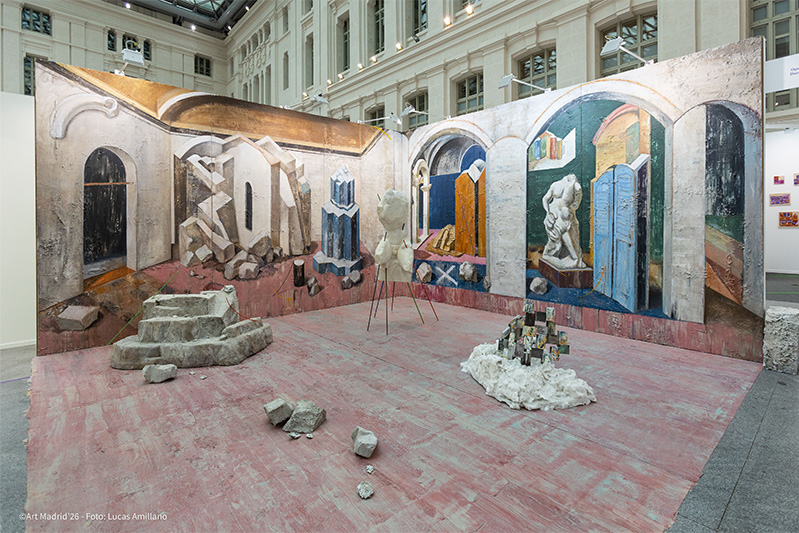
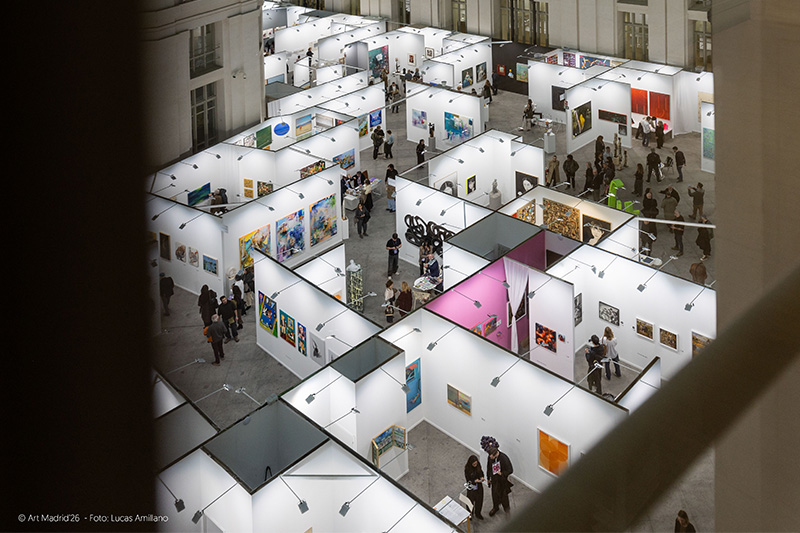
Art Madrid'26 – THE GALLERY BAT ALBERTO CORNEJO CELEBRATES THE 15TH ANNIVERSARY OF ART MADRID

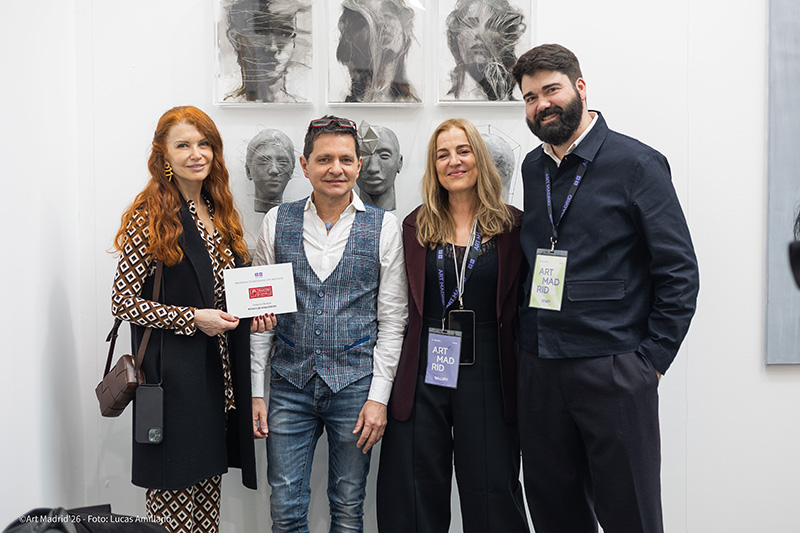
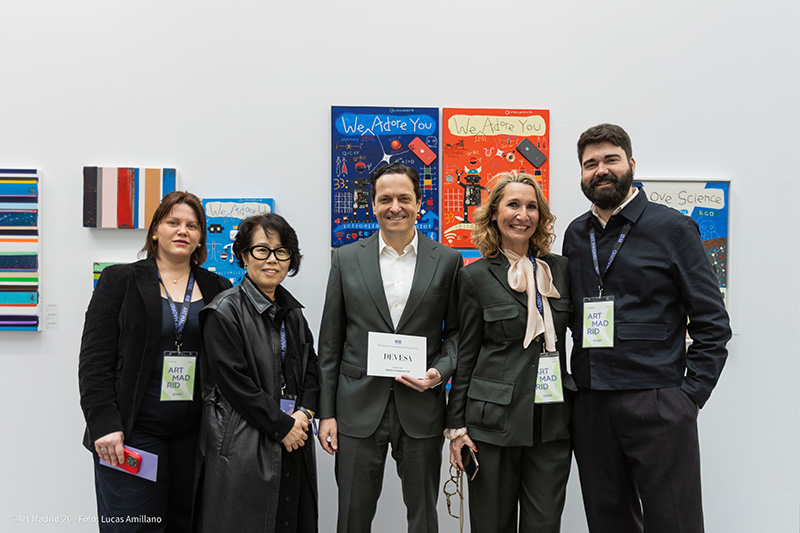
The gallery BAT Alberto Cornejo, has been associated to Art Madrid since its beginnings. Therefore, for this fifteenth anniversary, the gallery from Madrid is paying homage to the Fair with a selection of artists who have been key in its trajectory. Some of them have been present in Art Madrid during the fifteen editions.

BAT Alberto Cornejo was one of the 18 galleries that founded Art Madrid in 2005, as a response to the evident need to make visible the work of the galleries in Spain. Since then, its directors and team have been supporting the project, presenting artistic proposals that combine the work of young artists who follow a very contemporary expressive line and pieces by artists with more consolidated careers.
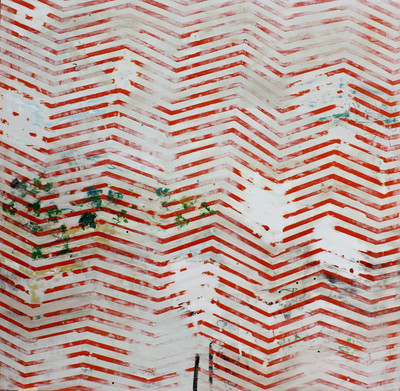
Pepe Puntas

La enredadera, 2019

Mixta sobre tabla

200 x 204cm

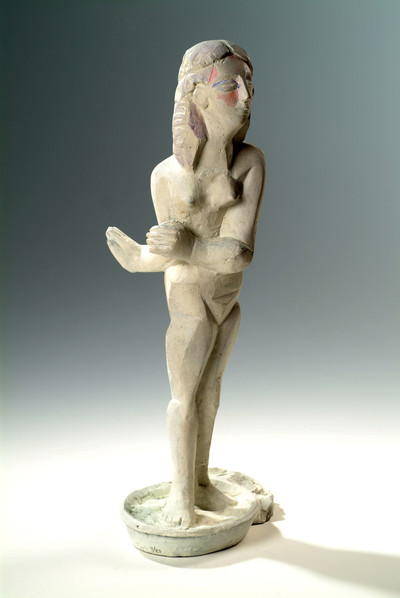
David Lechuga

Bañista, 2004

Bronze

44 x 20cm

The artworks of David Lechuga, Diego Canogar and Pepe Puntas, artists with whom BAT Alberto Cornejo has been working for years, are characterized by keeping a timeless aesthetic that still remains in the spotlight of contemporary art. The three artists, nationally recognized and having received countless awards, have works in some important national and international art collections.
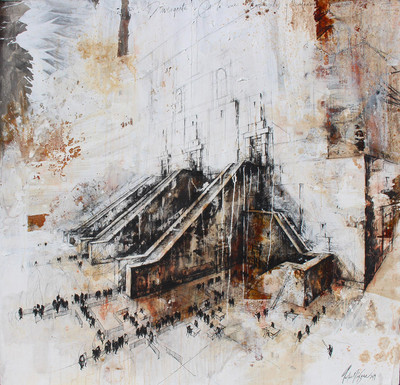

Gustavo Díaz Sosa

Caminos divergentes I, 2019

Mixta sobre lino

150 x 150cm

Diego Canogar

Tetramorfo extendido 101 N, 2014

Hierro patinado

145 x 90cm

On the other hand, the exhibition proposal of BAT Alberto Cornejo is completed by three unconditional emerging artists of the gallery: José Ramón Lozano, who returns to his beginnings with his portraits of direct faces and dark backgrounds, Gustavo Díaz Sosa with its colored architectural spaces and Cuban artist Roldán Lauzán, previously featured by the gallery Collage Habana, will make his debut with BAT Alberto Cornejo at the Fair, and whose artworks will make us reflect on the duality of being.

“We have rarely seen such strength in holding the brush as we see in the works of these three artists. With a totally visceral impulse, their paintings are framed within those images that chase you until you find yourself in front of them and fall down", the gallery owners point out.”, comment the gallerists.
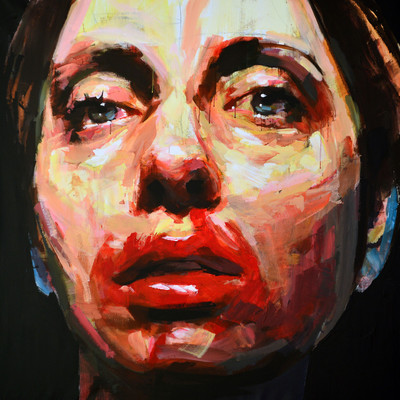

José Ramón Lozano

Sin Título (II), 2018

Acrílico sobre tela

120 x 120cm

Roldán Lauzán Eiras

Season III, 2019

Óleo sobre tela

140 x 140cm

These six developed and emerging artists are joined by the German photographer Jorg Karg, who is participating for the first time in the fair with BAT Alberto Cornejo, and the Slovak photographer Mária Švarbová, who will present a very special work, "Absolute Pink Bar ". This piece, with a format of 110 x 100 cm, is the result of an advertising collaboration, and there are only 10 copies in the world. BAT Alberto Cornejo will have one of these pieces in Art Madrid. In this edition, the gallery commits to photography supported by the international projection of these two artists, as they are present in galleries all over the world and with amazing careers despite their youth.


Jorg Karg

One mile light, 2019

Printing by pigment under acrylic glass on aluminum dibond

80 x 76cm

Mária Švarbová

Snow pool, Garden, 2017

Photography

90 x 90cm

At the booth of BAT Alberto Cornejo, the figurative art staged in paintings, sculptures, drawings and photographs, will have a greater presence than abstract art (with Puntas and Canogar as acting agents), and bright colors and the female figure (either in faces or bodies) will predominate. Gustavo Díaz Sosa, Diego Canogar and Pepe Puntas present works of their artistic life project, with their particular commitment to each piece.

It is worth noting that we can highlight the co-publication of the graphic work "Pont Neuf " by the artist Jorg Karg (image of the official poster of the Fair). The work will be available exclusively at Art Madrid. On the other hand, Roldán Lauzán has made a series of unpublished pieces for Art Madrid, from the series "Hierofante" and "Anatta Vadi ". We can also find in this edition, the catalogues "Futuro Retro " by Švarbová, of very exclusive sale in Spain.


 

When, in September 2012, the Spanish government decided to raise cultural VAT from the reduced rate of 8% to the standard rate of 21% (effective 1 September 2012), it was not merely implementing a fiscal adjustment measure in the midst of an economic recession. It was making a strategic decision that placed Spanish culture at a structural disadvantage compared to its European counterparts. The measure affected an industry that generated 503,700 jobs and accounted for 4% of Spain’s GDP, turning the country into one of the few in the eurozone where reduced VAT was not applied to cultural activities.


Paradoxically, that draconian increase of 13 percentage points—affecting cinema, theatre, concerts, and so on—failed to achieve its expected revenue goal; instead, it produced the opposite effect. According to data from the General Society of Authors and Editors (SGAE), the Spanish cultural industry at that time generated 503,700 jobs and represented 4% of GDP. When the Union of Business Associations of the Cultural Industry warned that the measure would result in the loss of 43 million spectators and €530 million in revenue, no one in government appeared to listen.


Iván Quesada. Playing hide and seek. Acrylic on canvas. 146 x 114 cm. 2025. Galería Aurora Vigil - Escalera.


The correction came late and in a fragmented manner. In 2017, theatre and live performances returned to a VAT rate of 10%. In July 2018, cinema joined this reduced rate. But here is where the real anomaly begins: while the audiovisual and performing arts sectors were able to breathe again, the visual arts—understood as the commercial activity carried out by galleries—remained at 21%. And they remain there today, in January 2026.


Spain currently maintains a deeply fragmented and contradictory cultural VAT system. Artists who sell their works directly are taxed at 10%. Galleries that sell those same works may be taxed at 21% under the Special Regime for Used Goods (REBU), although under this regime VAT is calculated on the margin of the transaction rather than on the total price, and not all gallery operations are necessarily covered by it. The result is Kafkaesque: the main channel for the commercialization of contemporary art often bears the highest tax burden in the entire Spanish cultural industry.


Isabel Ruiz. Sin título 4. 2025. Fotografía impresa en dibond. 100 x 160 cm. Nuno Sacramento Arte Contemporânea. Nuno Sacramento Arte Contemporânea.


The data dismantle any argument based on equity. According to the Art Basel report (The Art Basel and UBS Survey of Global Collecting 2025), 95% of art buyers acquire works through galleries, whether via their physical spaces, websites, social media, or fairs. In Spain specifically, gallery sales account for around 76% of the total value of the market. Tax-penalizing the main channel of commercialization is not tax neutrality; it is structural blindness.


The comparison with Europe is devastating. France applies a 5.5% rate to art sales, Germany 7%, Italy 5%, and more recently Portugal has joined with 6%. After Brexit, France accounts for more than 50% of art sales in the European Union and approximately between 6% and 9% of global auction sales, consolidating a dominant position that is no coincidence: it is the direct and expected result of a fiscal policy that understands art as an economic and cultural lever, not as a dispensable luxury good.


The consequences for Spain are tangible and documented. A Spanish museum that wishes to acquire a work by a Spanish artist from a Spanish gallery may be taxed at 21%; if it purchases the same work through a French gallery, in many cases it pays only 5.5%. The paradox is so grotesque that it borders on the Kafkaesque. The Spanish state fiscally penalizes its own cultural institutions for supporting the national market.

At fairs held within Spanish territory, national galleries compete with French, German, or Italian stands that can offer the same artists with a fiscal advantage of up to 16 percentage points. It should be noted, however, that in cross-border purchases within the EU, tax treatment depends on factors such as whether the museum acts as a taxable person with a VAT ID and on the nature of the transaction (domestic supply versus intra-Community supply, etc.), so this comparison serves as an illustrative example rather than a strict fiscal statement. This is not merely about competition; it is, in reality, structural dumping.


Daniel Bum. Self-Portrait II. 2025. Oil and acrylic on linen. 27 x 35 cm. CLC ARTE.


On 5 April 2022, the European Union approved Directive 2022/542, amending Directives 2006/112/EC and 2020/285 concerning the common system of VAT. This regulation explicitly allows Member States to apply reduced rates down to a minimum of 5% to “the supply of works of art, collectors’ items and antiques.” The deadline for its transposition into national legislation was 31 December 2024, with application from 1 January 2025. Spain has not transposed this directive with regard to the art market.


While France, Germany, Italy, Luxembourg, and Belgium have already adopted reduced rates for contemporary art, Spain maintains administrative silence. More than one thousand artists, gallerists, and professionals in the sector—including representatives of Spain at the Venice Biennale and National Fine Arts Award recipients—have signed the manifesto “Spanish Visual Artists Sign for Cultural VAT NOW.”


Thus, the government’s lack of action transcends the legal sphere and becomes a serious problem of economic vision. The Professional Committee of Art Galleries of France noted that a 5.5% rate for all transactions would generate between $40 million and $650 million in additional tax revenue through employment and art sales, whereas a 20% tax could generate losses of between $320 million and $610 million in tax revenue. The experience of countries such as the Netherlands and Portugal, which raised their cultural VAT rates and later reversed course after observing the devastating effects, should serve as a lesson.


Kim Han Ki. Don't forget me. 2024. Oil on canvas. 33.4 x 24.4 cm. Banditrazos Gallery.


FFrance and the effect of an intelligent fiscal policy

The French case dismantles the argument that culture does not generate fiscal returns. After implementing a 5.5% VAT rate for art, France currently accounts for more than 50% of art sales in the European Union and between 6% and 9% of global auctions. This dominant position is undoubtedly the direct result of a fiscal policy that understands art as an economic lever.


The Professional Committee of Art Galleries of France (CPGA) documented that a 5.5% VAT rate generates between $40 million and $650 million in additional tax revenue through employment and commercial activity in the sector, while maintaining rates of 20% produces losses of between $320 million and $610 million in tax revenue due to decreased activity. The data are conclusive: lowering VAT does not reduce revenue; it increases it.


Germany experienced a similar situation. The German Federal Association of Art Galleries and Dealers (BVDG) documented that a 19% VAT rate had stifled the market and caused gallery closures. The reduction to 7% in January 2025 was justified precisely as an economic reactivation measure. Italy, after years of debate, reduced its rate from 22% to 5% in 2025, with the aim -according to Culture Minister Alessandro Giuli- of “putting an end to an anomaly that made us less attractive compared to other European countries.”


Beatriz Castela. Spectrum IX. 2025. Acrylic on table. 80 x 60 x 3.5 cm. Galería Beatriz Pereira.


One of the most frequently repeated arguments for maintaining a 21% VAT rate on art is its perception as a luxury good. This reasoning reveals a profound misunderstanding of how the contemporary art market functions. The Art Basel 2024 report documented a significant shift in collector behavior: transactions under $5,000 grew by 7%, while galleries with sales below $250,000 increased by 17%. The art market is not the exclusive domain of millionaires; that is a stigma that new generations must break. In fact, the art market is an ecosystem increasingly accessed by the middle class through the acquisition of works.


Spain’s fiscal classification treats works of art at the same rate as tobacco, alcoholic beverages, or luxury gyms (21%), while books are taxed at a super-reduced 4%, and cinema and theatre at 10%. What cultural logic justifies taxing a photography book by an artist at 4%, but an original photograph by the same artist at 21%? The answer, however ironic it may seem, does not lie in cultural coherence, but rather in administrative inertia.


Onay Rosquet. Once upon a time there was a world. 2022. Oil on canvas. 100 x 100 cm. Collage Habana,


The consequences: from talent to brain drain

The numbers are stubborn. Spain has not managed to increase its share beyond 1% of the global art market since 2009. Meanwhile, the country has more than 24,000 artists and around 11,000 jobs directly linked to the visual arts ecosystem. This critical mass of talent and professionals is subjected to a fiscal pressure that does not exist in any other Spanish cultural sector or in any other major European art market.


he result is predictable and increasingly visible: talent drain, gallery closures, relocation of operations… and the list could go on. Some gallerists absorb part of the VAT to match prices with foreign competitors; others invoice through companies in other countries for intra-European transactions. These are survival strategies, not competitiveness strategies. The Spanish art market is becoming a second-division market, not due to a lack of artistic quality, which it has in abundance, but because of persistent administrative incompetence. Ultimately, the question is not technical but ideological: does Spain consider the visual arts to be part of its strategic cultural heritage, or does it treat them as an elitist whim?

The answer is in the Official State Gazette (BOE): as long as VAT remains at 21%, the answer is clear.


Alejandro Monge. See you in the streets. 2025. Fiberglass, cement, and pigments. 170 x 85 x 50 cm. 3 Punts Galeria.


Epilogue: a missed opportunity

Spain had until 31 December 2024 to transpose Directive (EU) 2022/542 and fiscally align its art market with Europe. It did not do so. Meetings with the Ministry of Culture and the Ministry of Finance have been ongoing for two years. Promises are repeated. The BOE remains unchanged. Meanwhile, the transactions that take place, the fairs held at home and abroad, and the artists who (fortunately) find representation with foreign galleries serve as a stark reminder of the cost of institutional inaction for culture.


The sector is not asking for privileges; it is simply demanding fairness. It asks that contemporary art receive the same fiscal treatment as cinema, theatre, or music. It asks that Spain stop penalizing those who build its contemporary cultural heritage.


The question is not whether Spain can afford to lower cultural VAT. French, German, and Italian data show that VAT reductions generate more economic activity and therefore more indirect tax revenue. The question is whether Spain can afford to continue ignoring it. Because at this moment, every percentage point of difference with France, Germany, or Italy is not merely a cold fiscal matter—it is a decision about what kind of cultural country we want to be. And administrative silence is also a decision.


Bibliography for Reference 🙂


Spanish Tax Agency (Agencia Tributaria) (2022). Council Directive (EU) 2022/542 of 5 April 2022 amending Directives 2006/112/EC and (EU) 2020/285 as regards value added tax rates. Available at: https://sede.agenciatributaria.gob.es/ Official State Gazette (BOE) (2022). Council Directive (EU) 2022/542 of 5 April 2022. Official Journal of the European Union, L 107, 6 April 2022. Available at: https://www.boe.es/buscar/doc.php?id=DOUE-L-2022-80541 EUR-Lex (2022). Council Directive (EU) 2022/542 of 5 April 2022. Available at: https://eur-lex.europa.eu/eli/dir/2022/542/oj?locale=es Law 37/1992, of 28 December, on Value Added Tax. Official State Gazette. Ministry of Culture and Sport (2024). Culture Satellite Account 2022. Madrid: Ministry of Culture and Sport. ARTEINFORMADO (2025). “Directive 2022/542: New Rules for the Art Market in Europe.” January 2025. Available at: https://www.arteinformado.com/magazine/n/la-directiva-2022542-nuevas-reglas-para-el-mercado-del-arte-en-europa-7402 AVA Castilla y León (2024). “Art VAT in 16 European Union Countries: What Are Their Current and Future Reduced Rates?” Available at: https://www.avacastillayleon.es/ AVA Castilla y León (2025). “A 5% VAT in Italy? Spain’s Comparative Disadvantage with 21% VAT on the Art Market.” Available at: https://www.avacastillayleon.es/ Finestre sull’Arte (2025). “The VAT Revolution in the Italian Art Market: New Perspectives for the Sector.” July 2025. Available at: https://www.finestresullarte.info/es/ elDiario.es (2025). “Spanish Galleries Switch Off ARCO to Demand the Promised Reduction of Cultural VAT.” 5 March 2025. Available at: https://www.eldiario.es/cultura/arte/ EXIBART.es (2025). “Spanish Art Facing the Fiscal Challenge: Galleries Call for Reduced VAT to Compete in Europe.” October 2025. Available at: https://www.exibart.es/mercado/ FACUA (2017). “FACUA Demands That the Government Apply the Same VAT Reduction to Cinema as to Live Performances.” Available at: https://www.facua.org/ Infobae (2025). “Culture Reiterates It Is ‘Fully in Favor’ of Lowering the 21% VAT on Contemporary Art Purchases.” 7 March 2025. Available at: https://www.infobae.com/ ARES – Aragón Escena (2023). “For a Reduced VAT Rate in Culture.” September 2023. Available at: https://www.aresaragonescena.com/ Bonet, Lluís (2014). “Causes and Effects of the Increase in Cultural VAT: A Comparative Analysis.” The Economy Journal, 10 February 2014. Available at: https://www.theeconomyjournal.com/ FUNCAS Blog (2016). “Is It Progressive to Reduce VAT on Cinema, Theatre, or Concerts?” 4 October 2016. Available at: https://blog.funcas.es/ INEAF Tribuna (2018). “Impact of the Increase in ‘Cultural VAT.’” 27 August 2018. Available at: https://www.ineaf.es/tribuna/ Consortium of Contemporary Art Galleries. Institutional statements and the manifesto “Spanish Visual Artists Sign for Cultural VAT NOW” (2024–2025). Institute of Contemporary Art (IAC). Mateu de Ros, Rafael. “The Controversial VAT on Art.” Available at: https://www.iac.org.es/ The Art Basel and UBS Survey of Global Collecting 2025. Available at: https://www.ubs.com/global/en/our-firm/art/art-market-research.html/ “The Spanish Art Market Contracts to 2014 Levels Due to the Pandemic.” Available at: https://www.elindependiente.com/wp-content/uploads/2022/10/NdP-Informe-Mercado-Arte-Espan%CC%83a-2021-OS-la-Caixa-CAST.pdf


The cited sources are verifiable and publicly accessible. Figures on VAT rates in European countries have been verified with official EU sources and national tax agencies. Percentages and economic data come from published sector studies or documented institutional statements in the media.