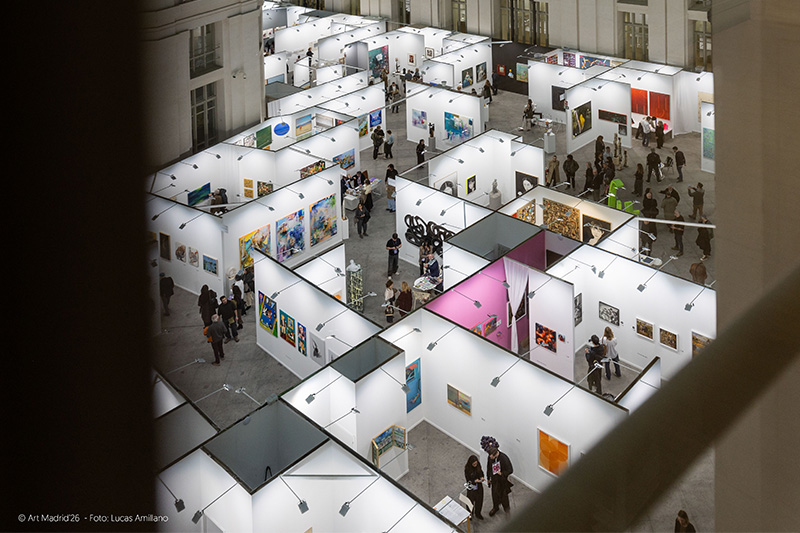
Art Madrid'26 – INTERVIEW WITH LUIS MIGUEL RICO

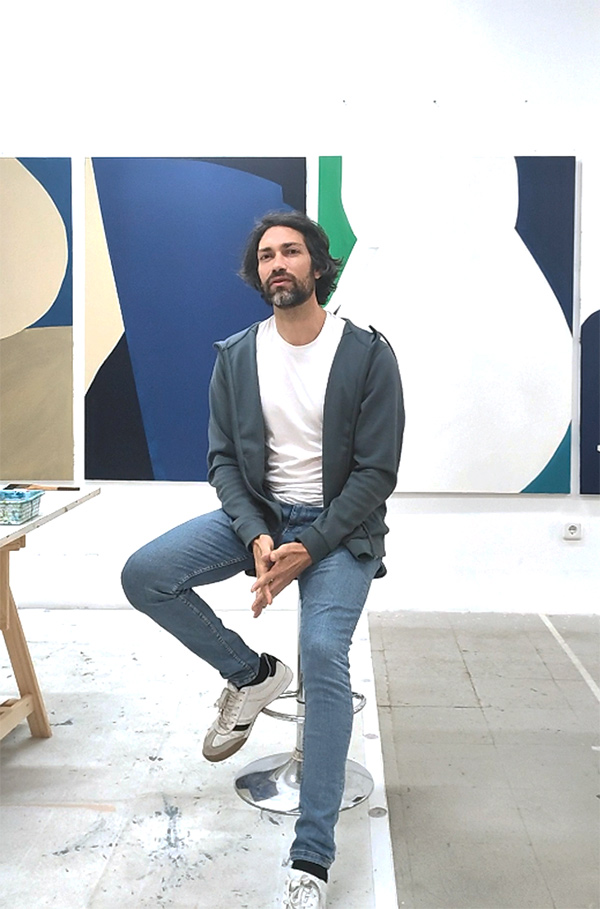
Luis Miguel Rico

“My workshop is full of materials that are familiar to all of us due to their use in the field of Fine Arts, among which I highlight papers that I dye previously for later manipulation. All of them, appear randomly on my work table, add to my problems of composition, which I try to solve directly on the support of the work.

In this act of composing, for me it is essential that those materials that I use and arrange on the surface, connect and come to have a unitary meaning, giving rise during the creative process to the non-renunciation of my work as a playful way for the creation and production of my works. Parallel to my collage work, I present a series of works where I exclusively use the medium of painting. With them, I generate a series of forms, which maintain a certain link with my collage structures. I use spots of broken colors and other more saturated colors where the density of the paint, more or less liquid, also plays an important role”

These stain structures are simple in outline and try to have a spatial sense close to the work that I create with my work on paper; superposition of planes, whose form is integrated on top of the previous one, or not, allowing the viewer to understand the different work processes that the creation of each of the works goes through.
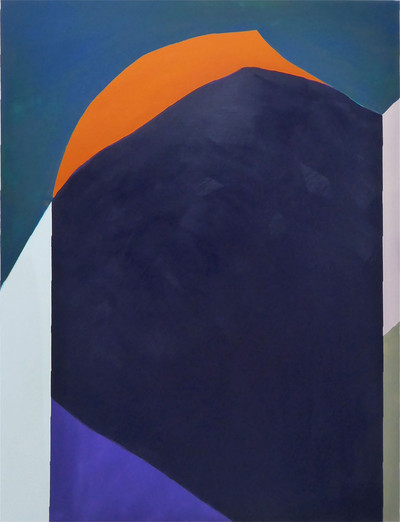
Luis Miguel Rico

ST, 2022

Oleo sobre lienzo

150 x 114cm

Interview:

What inspires you when you create?

When I create, I am inspired by any element that gives me strength in color, for example a sunset, a walk along the seashore or nature itself. When the whole issue of confinement happened to us, I was out in the street again, I am lucky to live near the countryside and I saw the blooming of spring, that strength, those colors, the shapes that reached me much more.


¿En qué has estado trabajando recientemente?

Recientemente he estado trabajando en composiciones partiendo de la base del collage, que son abstracciones geométricas, siempre ligadas un poco a la naturaleza y a la forma orgánica, y sobre todo la superposiciones de planos, unos más quebrados otros más saturados, buscando siempre la composición armónica.
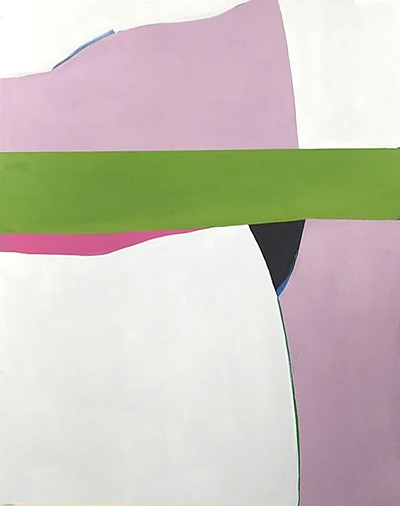
Luis Miguel Rico

Sin título, 2021

Oil on canvas

150 x 120cm

What have you been working on recently?

Recently I have been working on compositions based on collage, which are geometric abstractions, always linked to nature and organic form, and especially the overlapping of planes, some more broken, others more saturated, always looking for a harmonious composition.


What do you expect from your participation in Art Madrid?

From my participation in Art Madrid I hope to make myself known to a wider and more specialized public, deal with other artists and generate some kind of synergy with them, maybe some collaboration and enjoy the experience.
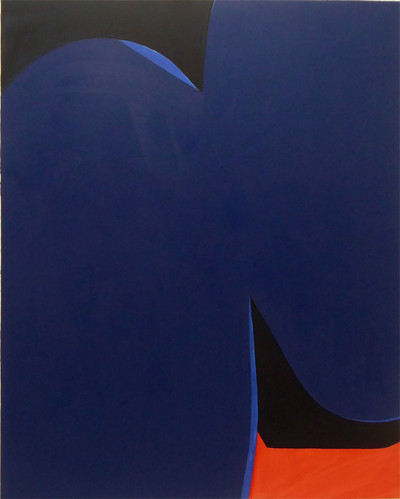
Luis Miguel Rico

ST, 2022

Oleo sobre lienzo

150 x 120cm

How did you come to this type of work?

Through experimenting with different materials and supports, ideas came up, sometimes I put them aside and other times I took them as good, and other times what I had discarded at the end have come back again and I'm applying it again.


What do you intend to convey with your work?

When I see a work of art I feel a lot of emotion, in the end the good thing about the artist is that he is able to transfer the emotion to a pictorial work, or whatever it is. So from my humble state, I try to transmit part of what I feel, when creating a work, to the viewer.


Luis Miguel Rico participates at Art Madrid with Gärna Gallery, alongside with Fernando de Ana, Hayden Rearik, Lucia Gorostegui y Lars Zech
ART MADRID’26 INTERVIEW PROGRAM. CONVERSATIONS WITH ADONAY BERMÚDEZ


The work of Cedric Le Corf (Bühl, Germany, 1985) is situated in a territory of friction, where the archaic impulse of the sacred coexists with a critical sensibility characteristic of contemporary times. His practice is grounded in an anthropological understanding of the origin of art as a foundational gesture: the trace, the mark, the need to inscribe life in the face of the awareness of death.

The artist establishes a complex dialogue with the Spanish Baroque tradition, not through stylistic mimicry, but through the emotional and material intensity that permeates that aesthetic. The theatricality of light, the embodiment of tragedy, and the hybridity of the spiritual and the carnal are translated in his work into a formal exploration, where underlying geometry and embedded matter generate perceptual tension.

In Le Corf’s practice, the threshold between abstraction and figuration is not an opposition but a site of displacement. Spatial construction and color function as emotional tools that destabilize the familiar. An open methodology permeates this process, in which planning coexists with a deliberate loss of control. This allows the work to emerge as a space of silence, withdrawal, and return, where the artist confronts his own interiority.


The Fall. 2025. Oil on canvas.195 × 150 cm.


In your work, a tension can be perceived between devotion and dissidence. How do you negotiate the boundary between the sacred and the profane?

In my work, I feel the need to return to rock art, to the images I carry with me. From the moment prehistoric humans became aware of death, they felt the need to leave a trace—marking a red hand on the cave wall using a stencil, a symbol of vital blood. Paleolithic man, a hunter-gatherer, experienced a mystical feeling in the presence of the animal—a form of spiritual magic and rituals linked to creation. In this way, the cave becomes sacred through the abstract representation of death and life, procreation, the Venus figures… Thus, art is born. In my interpretation, art is sacred by essence, because it reveals humankind as a creator.


Between Dog and Wolf II. 2025. Oil on canvas. 97 × 70 cm.


Traces of the Spanish Baroque tradition can be seen in your work. What do you find in it that remains contemporary today?

Yes, elements of the Spanish Baroque tradition are present in my work. In the history of art, for example, I think of Arab-Andalusian mosaics, in which I find a geometry of forms that feels profoundly contemporary. In Spanish Baroque painting and sculpture, one recurring theme is tragedy: death and the sacred are intensely embodied, whether in religious or profane subjects, in artists such as Zurbarán, Ribera, El Greco, and also Velázquez. I am thinking, for example, of the remarkable equestrian painting of Isabel of France, with its geometry and nuanced portrait that illuminates the painting.

When I think about sculpture, the marvelous polychrome sculptures of Alonso Cano, Juan de Juni, or Pedro de Mena come to mind—works in which green eyes are inlaid, along with ivory teeth, horn fingernails, and eyelashes made of hair. All of this has undoubtedly influenced my sculptural practice, both in its morphological and equestrian dimensions. Personally, in my work I inlay porcelain elements into carved or painted wood.


Between Dog and Wolf I. 2025. Oil on canvas. 97 × 70 cm.


What interests you about that threshold between the recognizable and the abstract?

For me, any representation in painting or sculpture is abstract. What imposes itself is the architectural construction of space, its secret geometry, and the emotion produced by color. It is, in a way, a displacement of the real in order to reach that sensation.


The Anatomical Angel. 2013. Ash wood and porcelain. 90 × 15 × 160 cm.


Your work seems to move between silence, abandonment, and return. What draws you toward these intermediate spaces?

I believe it is by renouncing the imitation of external truth, by refusing to copy it, that I reach truth—whether in painting or in sculpture. It is as if I were looking at myself within my own subject in order to better discover my secret, perhaps.


Justa. 2019. Polychrome oak wood. 240 × 190 × 140 cm.


To what extent do you plan your work, and how much space do you leave for the unexpected—or even for mistakes?

It is true that, on occasions, I completely forget the main idea behind my painting and sculpture. Although I begin a work with very clear ideas—preliminary drawings and sketches, preparatory engravings, and a well-defined intention—I realize that, sometimes, that initial idea gets lost. It is not an accident. In some cases, it has to do with technical difficulties, but nowadays I also accept starting from a very specific idea and, when faced with sculpture, wood, or ceramics, having to work in a different way. I accept that.