OPENING OF THE ART MADRID-PROYECTOR’20 ACTIVITIES PROGRAM
Feb 11, 2020
art madrid
Tomorrow, Wednesday 12th February, the programme of activities developed by Art Madrid and the video art platform PROYECTOR starts. Under the curatorship of Mario Gutiérrez Cru and with the collaboration of the spaces MediaLab Prado and Sala Alcalá 31 the program is dedicated to video art, action art and new media.
The convergence between technology and art generates new languages and forms of artistic expression. From Art Madrid we want to bring the public closer to these disciplines by generating a direct dialogue with the creators where there are no intermediaries. Our commitment and one of the fundamental pillars of this programme are the practical and immersive activities in creation through master classes, meetings and presentations or a visit to an artist's studio.
To start this programme, the artist Patxi Araújo will give a master class tomorrow, Wednesday 12 February at 5:30 pm in the MediaLab Prado auditorium, where the following master classes by Olga Diego and Lois Patiño will also take place.
Under the title "All Prophets are Wrong" they will share their creative experience, the paths explored in communication and their productive processes incorporating technology without losing the burden of discourse.
Patxi Araújo develops his work in the territory of the poetics of new media. His work has been recognized and selected in different biennials, festivals and competitions of video art and electronic experimentation. A reflection that goes beyond aesthetics, and that runs between the digital and the human, between nature and artificial life. Places where the limits are diffuse, spaces where the public can delve together with the artist to know and understand the metaphoric of Patxi Araújo's work.
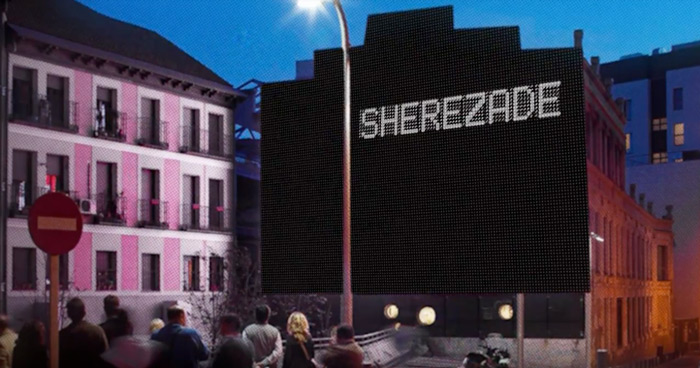
Later, at 8.30pm and as an opening, the interactive art work Sherezade will be shown for the first time. A site-specific creation by Patxi Araújo for the facade of MediaLab Prado. The art work is based on play. It is a random generation of sentences and phrases according to the position of the spectator in the front square of the facade. Just as automatic poetry emerges from the poet's entrails or from any other of his organs that have stored reserves, "Sherezade" elaborates literary proposals in the form of titles or epigraphs from a bank of words chosen by the author and stored in a virtual memory in random mode. The movement, presence or absence of people, animals or things in the square of MediaLab Prado determines that the program chooses among those words, and generates lapidary, poetic, absurd or sublime phrases. Therefore, if some kind of literary causality exists, it should be sought in the mixture of the activity in the square and the random mode which the words in the program emerge. Sherezade's memory today mixes 24 prepositions, 31 articles, 926 adjectives and 726 names of the Spanish language conjugated in the masculine singular.
The role of the public in this installation will be crucial to seeing it in operation. "Sherezade" will be available from sunset every day until mid-March.
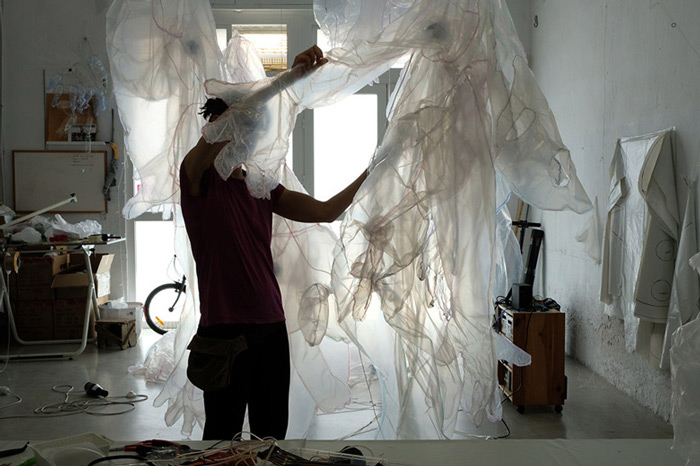
On Thursday at 5:30pm we continue the programme with a master class by Olga Diego. An artist who combines scientific knowledge and art to create an installation area loaded with symbolism. Olga reflects on when the creative process becomes an art work in itself through all the material left behind in the testimonial process. The artist invites us to learn about the process and invention of the art work, how it works and will make a small exhibition when she puts some of these pieces into action. A space that aims to be a unique experience.
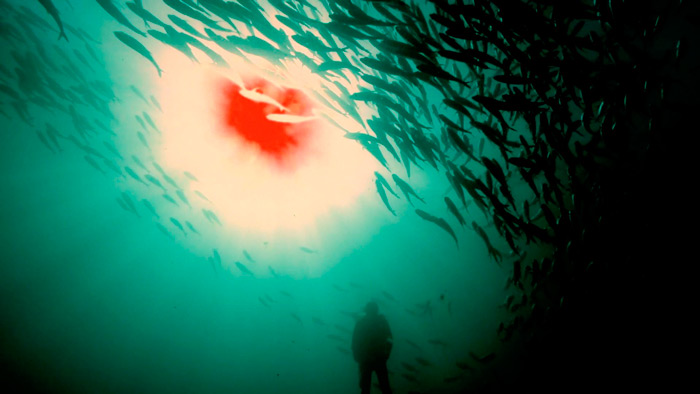
To finish this cycle of master classes, the artist Lois Patiño proposes on Friday 14 at 5:30 pm an encounter in which he will trace different paths in his art works to discuss this intermediate space between contemporary art and cinema, the frontiers that separate them and that Lois proposes to dilute. Art Works that take the form of video installations, experimental fictions, video art pieces or creative documentaries. The still image and the moving image, visual abstraction and the impact of the new formats that transit in places where perhaps these frontiers should disappear.
In order to obtain close knowledge and bring the public closer to a more detailed understanding of contemporary art, the opinion of professional experts in the field could not be lacking. On Thursday February 20 at 6:00 pm we will hold a round table in the collaborative space Sala Alcalá 31. Moderated by sound artist and composer Miguel Álvarez-Fernández, we will have Rafael Doctor, independent curator and cultural manager, Karin Ohlenschläger, critic, curator and director of activities of LABoral Centro de Arte y Creación Industrial, and Berta Sichel, cultural agent and curator director of Bureauphi Art Agency. The table will debate the evolution of the still image, passing through video art to the new media and will reflect on the current impact it has on creators and the society that enjoys and consumes it.
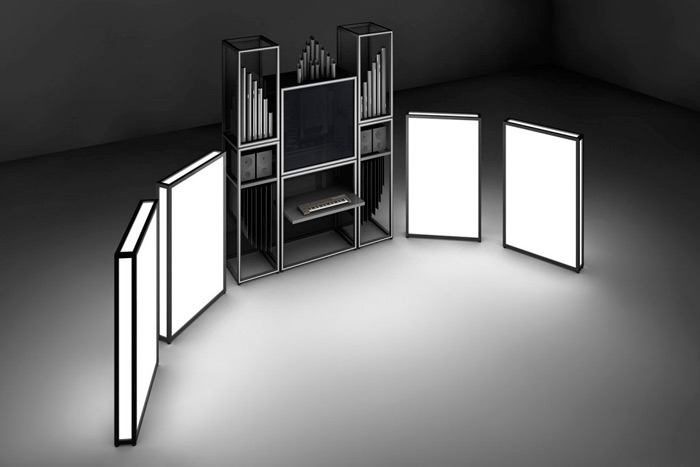
Converging in all the objectives of Art Madrid-Proyector'20 we have the visit to Eduardo Balanza's studio on February 22nd at 12:00 pm. This activity presents us with the possibility of getting to know the artist's workspace, understanding his creative process and understanding the application and techniques used to finally enjoy a small performance in this intimate space. Eduardo Balanza will show the audience how the "B71" works, an electro-acoustic instrument inspired by baroque organs with a manual and automatic system of operation activated by vibrating speakers on plates capable of connecting to weather data websites.
To visit Eduardo's workshop it is essential to register beforehand using the form
All programming is open and free to the public, thus generating the opportunity to attend a diverse audience where the only requirement is the ability to be amazed and the willingness to live unique experiences in the art world.